Repair planning begins before a vessel arrives. A clear work package helps an owner, technical superintendent, service providers and surveyors understand the same scope, identify dependencies and control commercial risk. This is a planning guide, not an engineering procedure or a promise of facility availability. Vessel-specific decisions must be made by competent personnel under the applicable safety-management system and flag, class and port requirements.
Key takeaways
- Separate known scope from inspection-dependent work.
- Confirm facility suitability and availability before committing an arrival window.
- Require documented approvals, tests and handover before return to service.
1. Assemble the vessel and operational brief
Provide the vessel’s name, type, IMO number where applicable, principal dimensions, drafts and current location. Add the preferred maintenance window, operating commitments and the reason for the work: planned maintenance, defect rectification, conversion or survey preparation. Identify the owner’s decision-maker and technical contact so commercial and engineering questions reach the right people.
Include relevant drawings, machinery information, defect reports, photographs and outstanding survey items where you are authorised to share them. Mark uncertain observations as uncertain. A complete brief does not eliminate inspection, but it helps distinguish a preliminary estimate from a firm scope and avoids scheduling work against assumptions about access or vessel condition.
- Vessel particulars, location and desired maintenance window.
- Defect list, drawings and relevant survey requirements.
- Owner’s technical representative and approval authority.
2. Divide the work package into accountable jobs
Organise the scope by system and location: hull, machinery, piping, deck equipment, electrical systems and other applicable areas. For every job, state the problem, proposed work, supplied materials, required evidence and acceptance criteria. Separate optional work, owner-supplied items and work that can only be quantified after opening up or inspection.
Identify dependencies between activities. Access, lifting, isolation, coating preparation, survey attendance and spare-parts delivery can determine the critical sequence. Do not combine all uncertainty into a single lump-sum description. A transparent work list makes it possible to compare quotations, assign responsibilities and evaluate variations without losing sight of the vessel’s operational objective.
3. Confirm docking and service arrangements
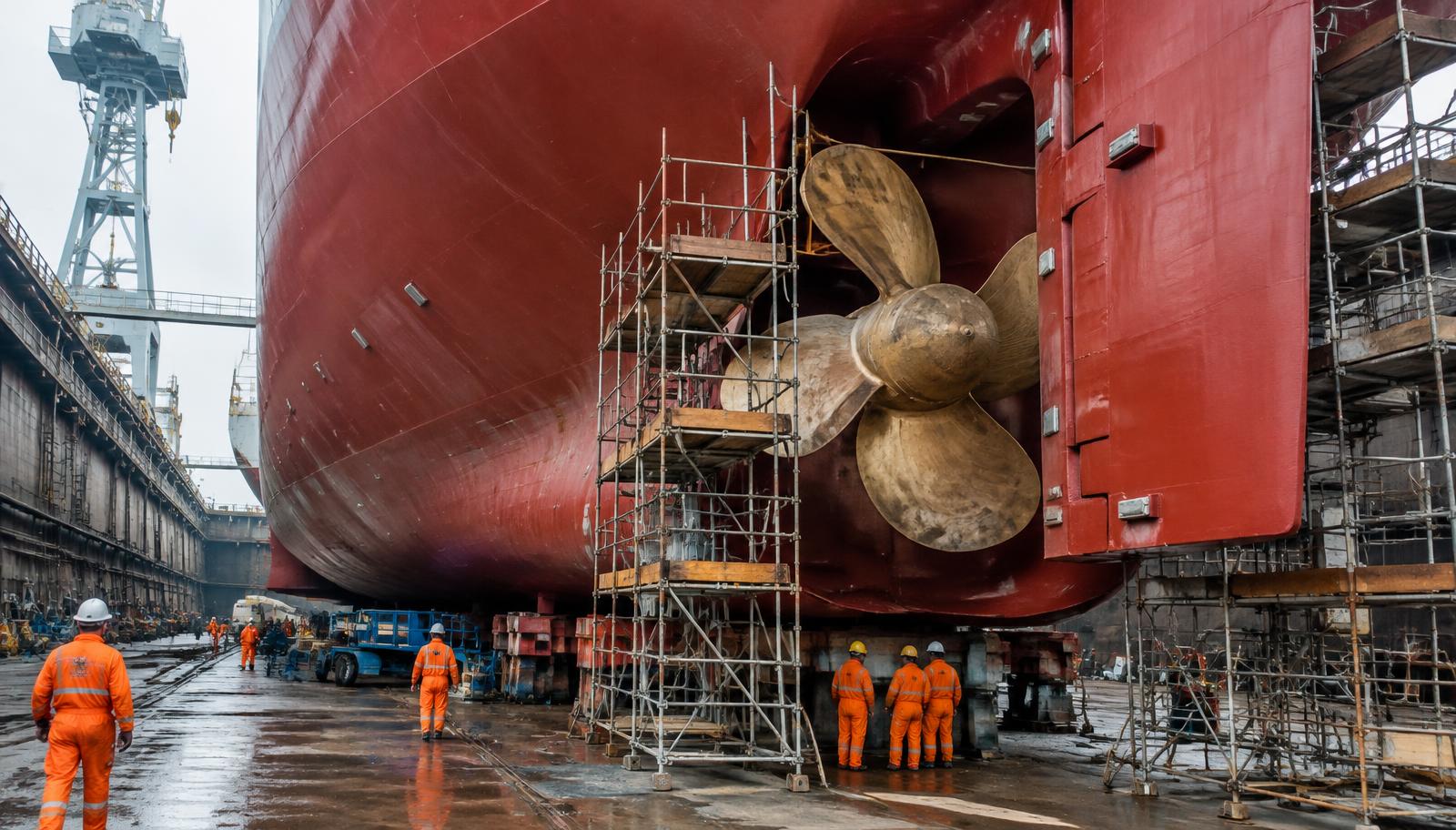
Dry-dock planning requires confirmation of suitability for the specific vessel, facility availability, entry conditions and the responsibilities of the parties involved. Discuss vessel dimensions, draft, displacement information, docking plans and any limitations with the competent facility and vessel representatives. Do not infer capacity from a photograph, a service category or a general commercial discussion.
Agree arrival coordination, access controls, utilities, waste arrangements, owner-supplied spares and the attendance of class or other surveyors where required. PAGE International can receive maritime repair enquiries and discuss coordination needs; the exact facility, specialist resources, dates and scope must be confirmed for each engagement. Listing a service does not establish ownership of a dock or a partnership with a specific operator.
4. Make safety interfaces explicit before work starts
The IMO describes the ISM Code as an international standard for safe ship management and pollution prevention, including assessment of identified risks and appropriate safeguards. Repair work should therefore be coordinated with the vessel’s applicable safety-management arrangements, not managed only as a collection of contractor tasks. Clarify who authorises work, how simultaneous operations are assessed and how unsafe conditions trigger a stop.
Enclosed-space entry is a particular interface risk during inspection, cleaning and repair. IMO adopted revised recommendations in June 2025. Competent personnel must determine the applicable controls, training, permits, testing and rescue arrangements using the authoritative guidance and vessel procedures. This article intentionally does not provide an entry procedure or substitute for a job-specific risk assessment.
- Identify work authorisation and stop-work responsibilities.
- Coordinate isolations and incompatible simultaneous activities.
- Use competent personnel and vessel-specific safety procedures.
5. Control findings, variations and schedule changes
Inspection can reveal defects that were not visible during quotation. Establish a variation process before this happens: record the finding, technical recommendation, price and time impact, and obtain approval from the authorised owner representative. Keep photographic or measurement evidence where relevant and distinguish mandatory corrective work from discretionary improvements.
Use a daily progress record that tracks completed jobs, open decisions, parts availability and the next planned activities. Escalate schedule risks while options still exist. A low initial quotation can be misleading if exclusions, unit rates or approval responsibilities are unclear. Evaluate the final repair exposure, not just the entry price.
6. Plan acceptance and return to service
Agree the inspection and testing requirements for each completed job with the responsible technical parties. Preserve material records, relevant test reports, drawings or updates and survey documentation where applicable. Record defects or limitations that remain open and the action agreed for each one. Technical acceptance and settlement of the final invoice should be related but distinct processes.
Before departure, confirm that the owner’s representatives have the handover package and understand any follow-up obligations. Only the competent authorities and responsible vessel personnel can determine the conditions for return to service. Send PAGE International a structured vessel brief to begin a discussion of repair, engineering, fabrication or maritime-logistics requirements.
- Reconcile the approved scope with completed work and variations.
- Collect applicable inspection, test and survey records.
- Document remaining actions and responsible persons.
Sources & further reading
Discuss your requirements
Share vessel particulars, location, work list and intended arrival window so our maritime team can assess the enquiry.