IMO’s Maritime Safety Committee adopted revised recommendations for entering enclosed spaces aboard ships on 27 June 2025. For vessel owners and repair coordinators, the relevance is not confined to life at sea: inspection, cleaning and repair can involve interfaces between crew, contractors and shore-based management. This article explains the planning implications without attempting to provide a space-entry procedure.
Key takeaways
- Use the current authoritative recommendations, not an undated checklist.
- Agree crew–contractor safety interfaces before inspection or repair begins.
- Commercial deadlines must not override competent safety decisions.
What IMO adopted and what this article does not claim
Resolution MSC.581(110), adopted on 27 June 2025, contains revised recommendations for entering enclosed spaces aboard ships. Its preamble identifies continuing loss of life associated with atmospheres affected by oxygen depletion, oxygen enrichment, toxicity or flammability, and highlights the role of organisational leadership in effective implementation.
The resolution also refers to existing SOLAS provisions concerning enclosed-space drills, atmosphere-testing instruments and safe ship operation. These references should not be interpreted here as a newly invented universal deadline or a vessel-specific legal conclusion. Owners must consult the resolution, their flag administration, applicable rules and competent advisers to determine the requirements relevant to their vessels.
Sources & further reading: [1]
Why enclosed spaces belong in the repair work package
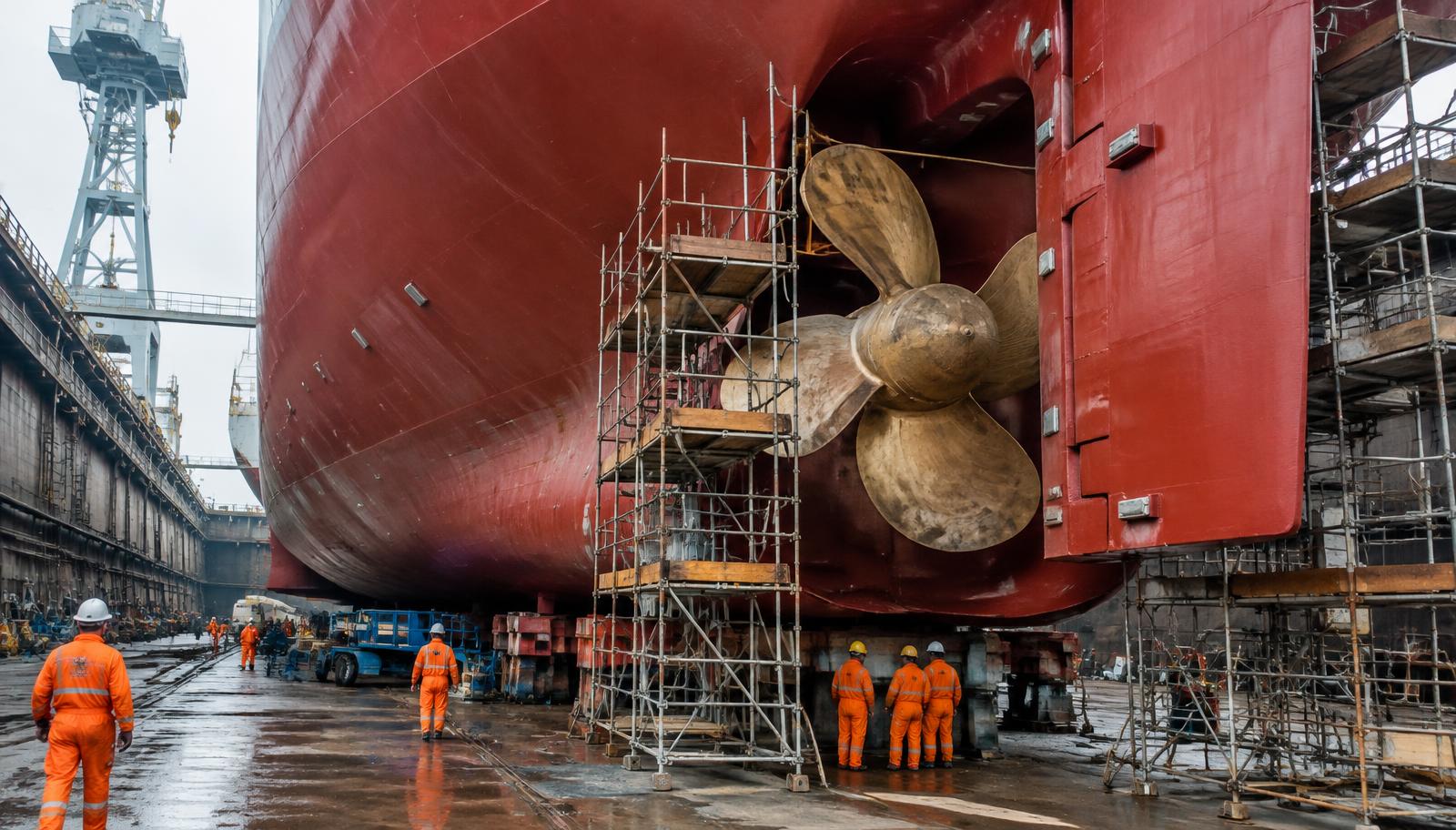
A repair scope may include tank inspection, internal steel work, piping access, cleaning or other activities that bring personnel close to enclosed spaces. The work package should identify such interfaces early enough for competent technical and safety personnel to assess them. An item described only as “inspect and repair” can conceal dependencies that affect access, authorisation, staffing and the schedule.
Repair planners should avoid treating the safety-management work as an unspecified task to be completed after arrival. Ask who assesses the space and job, who controls access, how crew and contractor procedures interact and how changes in condition or scope are escalated. The correct operational controls must be determined by competent personnel; this article does not prescribe testing limits, entry methods or rescue techniques.
Leadership is a control, not a slogan
IMO’s explanation of the ISM Code emphasises safe management, pollution prevention, assessment of identified risks and appropriate safeguards. It also stresses commitment and competence across management and personnel. For a repair period, that translates into clear responsibility for authorising activities, resolving incompatible operations and stopping work when conditions are unsafe.
An owner and service provider should agree the interfaces between their respective responsibilities in advance. A contractor’s availability or a vessel’s commercial urgency does not settle whether a task can proceed safely. Ensure that decision-makers have the authority and information to delay work where required, without pressure to replace technical judgement with an optimistic timetable.
Sources & further reading: [2]
Questions to include in repair procurement
Ask how a proposed provider will coordinate with the vessel’s applicable safety-management system and what competent roles are needed for the agreed scope. Discuss permits, training evidence, communication, simultaneous operations, emergency arrangements and the records that will be retained. These are assessment topics for qualified personnel, not a substitute checklist that certifies a provider as safe.
Clarify exclusions and responsibilities in the quotation and work agreement. Identify work that depends on owner preparation, survey attendance or specialist resources. If inspection reveals a different condition, require reassessment through the agreed process before work continues. The variation process should consider safety implications as well as cost and time.
- Which crew and contractor responsibilities must be coordinated?
- Who can authorise, reassess and stop the work?
- What evidence and records will support the agreed handover?
Link safety planning to a documented repair handover
A professional repair close-out connects the authorised work scope with the completed activities, inspection evidence and remaining actions. The owner’s responsible personnel should receive the relevant records and know which limitations or follow-up obligations remain. A signed commercial completion form should not be mistaken for an independent declaration of vessel compliance.
PAGE International’s maritime division can discuss repair-enquiry preparation and coordination requirements. Facility availability, specialist resources and engagement responsibilities must be confirmed case by case. No certification, named shipyard partnership or authority to approve a vessel’s return to service is claimed in this article.
Sources & further reading
Discuss your requirements
Prepare your vessel particulars, repair list and relevant safety or survey interfaces before contacting our maritime team.